Artificial intelligence is revolutionizing medicine at a vertiginous speed, from more precise diagnoses to personalized treatments. This technology is opening new doors to improve health and quality of life.
However, such rapid progress raises fundamental questions about the future of humanity. Will AI be our greatest friend or our worst nightmare? The answer depends on how we develop and use it.
Do you think the benefits of AI exceed the risks, or should we proceed with caution
What is Artificial Intelligence?
It could be considered a field of computer science with the goal of enabling computers and machines to imitate human cognitive processes such as learning, thinking, and problem solving.
Examples of AI in our daily lives include digital assistants, GPS navigation systems and autonomous vehicles. In addition, generative AI tools, such as ChatGPT, are revolutionizing the way we create and consume content by being able to creatively generate text, code, images or music.
ARTIFICIAL INTELLIGENCE: A JOURNEY OVER THE TIME.
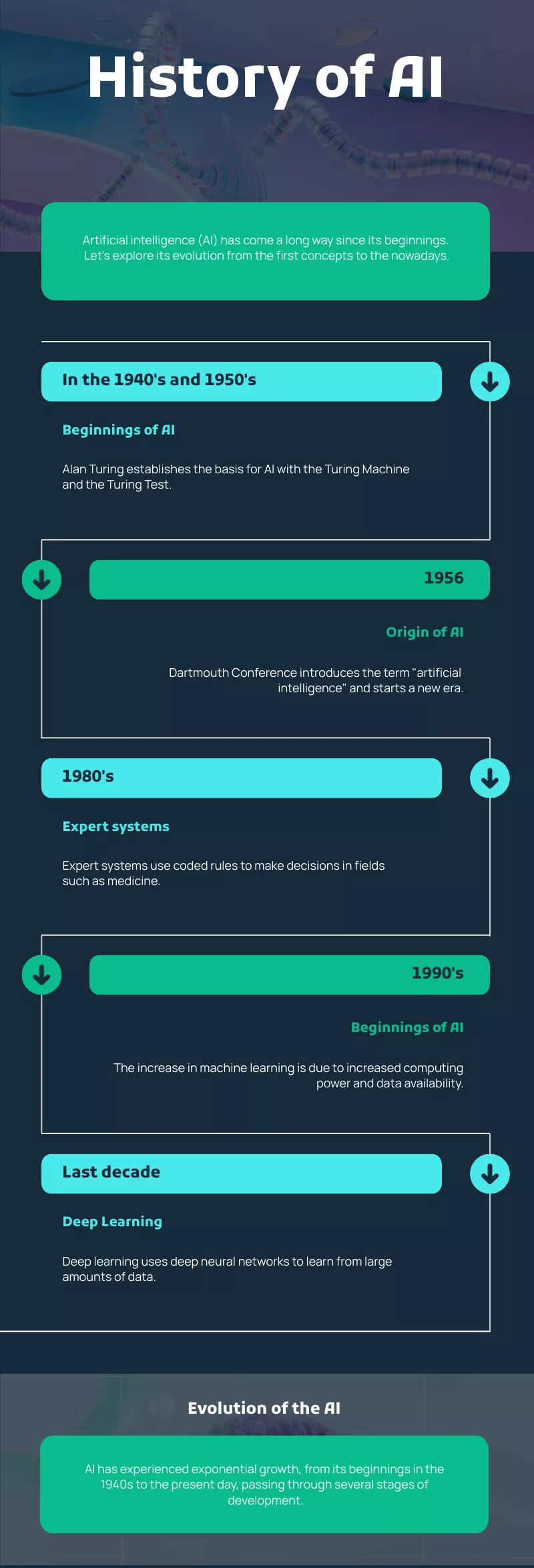
Artificial intelligence has its origins in the 1950s, with the creation of the Turing Machine, a fundamental theoretical model for computers.
Alan Turing, its designer, proposed the famous Turing Test as a way to determine whether a machine could exhibit intelligent behavior indistinguishable from that of a human.
In 1956, the Dartmouth Conference marked a milestone by beginning to use the term “artificial intelligence” and laying the foundations for the discipline.
From there, AI developed gradually, with significant advances in expert systems during the 1980s.
These systems, designed to emulate human reasoning in specific areas such as medicine and finance, represented one of the first practical applications of AI.
However, it was in the 2010s that AI experienced a true revolution thanks to the emergence of deep learning.
The increase in computational power and the availability of large data sets made it possible to train increasingly sophisticated artificial neural networks.
In this way, they achieved impressive results in tasks such as image recognition and natural language processing.
Today, we are in the era of generative AI, where models such as GPT-3 demonstrate an unprecedented ability to understand and generate human text.
This technology opens up new possibilities in fields such as machine translation, code generation, and creative content creation.
AI has evolved from its beginnings as a theoretical concept into a technology that transforms our daily lives and redefines the future.
Discover the 5 types of AI most popular in use today.

–Expert Systems.
These are computer programs that, in their purpose, are to solve specific problems of a given subject by imitating the reasoning of a subject matter expert.
They work through structured rules that tell the machine what decision to make in a given situation. If some unexpected problems appear, they are not able to solve them.
Examples of use:
-Business.
Inventory control, stock evaluation.
-Field.
Medicine, financial services, technology, education.
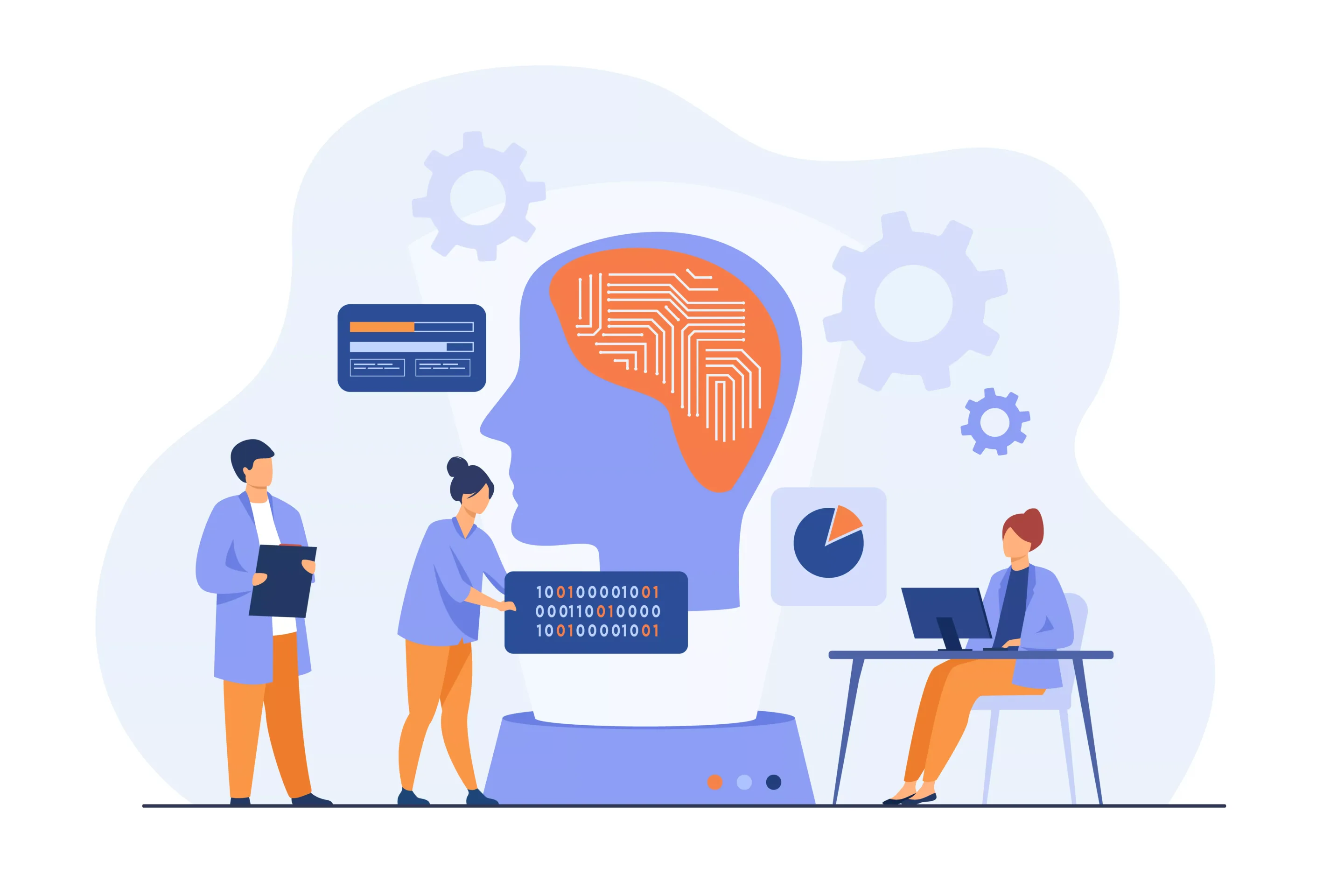
-Machine Learning.
Algorithms and different models are designed with the purpose of learning on a database, where they filter the information and offer results. Their performance improves with experience.
Currently, 3 types are used:
- supervised learning: they are trained with pairs of data: labeled input-output.
- unsupervised learning: trained with unlabeled data. Analyzes new data and establishes meaningful connections. Finds patterns.
- Reinforced learning: software is trained to make the best decisions. Simulates the trial-and-error learning system we humans use.
Actions that are in line to achieve the goal are reinforced; those that fall away are ignored.
Natural language processing (NLP): when we use machine learning to understand human language, whether verbal or written..
Examples of use:
-Business.
Customer service, process automation, content creation.
-Field.
Technology, health, entertainment, automotive, and finance.
-Deep Learning.
Based on artificial neural networks, they go a step further in the evolution of AI.
They are algorithms with a high level of complexity with which more complicated tasks can be carried out (complicated code) and with high computational requirements (extensive databases).
It allows us to use unstructured data such as images or videos.
Examples of use:
-Business.
Financial forecasting, marketing, security.
-Field.
Technology, health, entertainment, automotive, and finance.

-Robotics.
Robotics is an independent field of Artificial Intelligence. It has taken advantage of these digital resources to develop.
At present, there are robots able to walk, perform complicated tasks, or even play chess. AI is behind this evolution.
Examples of use:
-Business.
Logistics, production, customer service.
-Field.
Industrial automation, medical assistant, space exploration, logistics and warehousing, domestic services.

-Intelligent Agents (generative AI).
These are systems that have greater autonomy and freedom to learn and execute decisions. They are able to make decisions and act on them, simulating human behavior.
Companies can use generative AI to design their own intelligent agents customized to their needs.
It is a developing technology that involves ethical challenges (unfair, biased results), data privacy issues, limited computing resources, and technical complexity.
Examples of use:
-Business.
Personal assistants, logistics.
-Field.
Virtual assistants, recommendation systems, chatbots, monitoring and control systems, autonomous navigation.
ARTIFICIAL INTELLIGENCE APPLIED TO THE HEALTH SECTOR: MEDICAL INNOVATION.
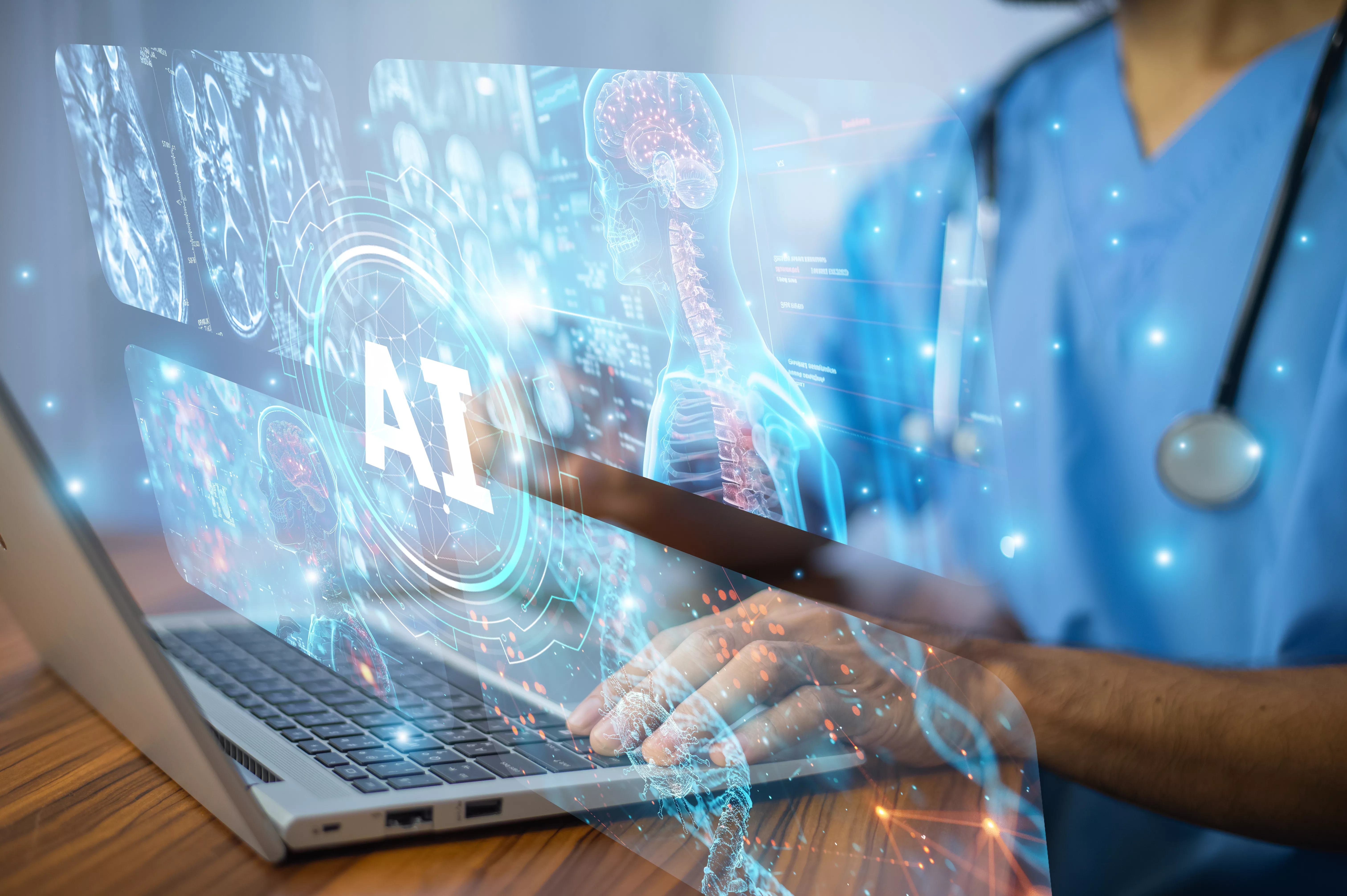
How could AI be applied in healthcare?
In 3 categories:
- Algorithmic solutions
- Image processing
- Tools to support medical practice.
Algorithmic solutions.
Currently, in the medical field, they are the most widely used due to their evidence-based approaches, programmed by researchers and clinicians. When we integrate known data into algorithms, computers can extract information and apply it to a problem.
For example, Multiple Sclerosis. Using algorithms in accordance with experts in this field, together with data from the computerized medical record, multiple treatment options can be reviewed and the most appropriate treatment for a particular patient can be advised (personalized medicine).
Image processing.
There is great potential for visual pattern recognition in medical practice. We must keep in mind that the human eye fails, even in the best clinicians.
In the case of breast cancer in women, by having regular mammograms for 10 years, they could receive at least one “false positive”. This implies additional testing and even unnecessary treatment. It should also be noted that the interpretation of a mammogram can be complicated, and each radiologist may interpret it differently.
The visual pattern recognition software is capable of storing and comparing tens of thousands of images using the same interpretation techniques as humans and is 5% to 10% more accurate than the average physician. And it is expected to further expand the accuracy of this type of software in the future.
Tools to support medical practice.
Experience is a degree, and in a profession like medicine, the importance of getting diagnoses right and trying to make as few mistakes as possible increases.
Each doctor has his or her own experience, way of thinking, and way of working that is different from that of other doctors. In cases of particular difficulty, even several doctors form a team and combine their experience to make a personalized diagnosis and treatment of the patient.
There are 2 AI approaches that could currently improve medical performance. The first is Natural Language Processing (NLP), a specialization of AI that helps machines understand and interpret human speech and writing.
This software is capable of analyzing thousands of complete electronic medical records and deciding what steps should be taken to evaluate and administer treatment to patients with different diseases.
The second involves using computers to observe and learn from doctors as they perform their routine work. It analyzes all this information in real time to suggest in advance a possible personalized treatment.
The will is to reduce “false positives” and increase effectiveness. The idea with this software is not to replace the physician but to be a useful tool to improve the personalization of treatments for patients and reduce “false positives.”.
AI HEALTH BENEFITS.
- Disease prevention.
AI can be used as a tool to prevent disease by identifying risk factors and patterns in large volumes of data before diseases fully develop.
One example of its use is in cardiovascular disease prevention; according to a Mayo Clinic study, AI is capable of predicting adverse cardiac events with an accuracy of more than 80%. With this information, early and personalized interventions can be made.
- Diagnosis and treatment of diseases.
Machine Learning algorithms have the ability to analyze large volumes of patient data to identify patterns that may go unnoticed to human eyes. They learn from historical data, continuously improving their accuracy.
Another option is Deep Learning algorithms that use neural networks to analyze complex medical images, such as MRI or CT scans. In other words, they have the ability to identify patterns not visible to the human eye, increasing diagnostic accuracy and enabling earlier and more effective treatments.
- Research.
AI is playing a strategic role, increasing the speed of medical research. From the discovery of new drugs to the optimization of clinical trials, we are seeing a shift in medical research procedures.
In the drug discovery sector, AI is able to analyze thousands of chemical compounds and predict which have the greatest therapeutic potential, accelerating the drug development process.
It increases improvement and reduces costs for AI algorithms because they are optimizing clinical trials by predicting which patients will respond best to a treatment.
- Patient support.
Health Chatbots, trained to support people with chronic diseases, alert the patient when to take their medication, resolve doubts, or provide emotional support. This system helps reduce the burden on healthcare facilities.
- Training for healthcare professionals.
Training is also changing thanks to AI, from medical simulations to automated self-learning platforms.
These training systems make it possible for medical students and trainees to practice complex procedures in a controlled and safe environment, reducing risk in actual practice.
- Task automation.
Aside from the clinical benefits, we should not forget that AI also has the potential to improve productivity in the healthcare sector.
Administrative processes such as the analysis of medical records can be automated, freeing up time for healthcare professionals and also reducing costs. Efficiency and quality of care are also improved.
It is important that technological adaptation prioritizes patients’ rights and the protection of health data. The EU’s Artificial Intelligence Regulation aims to ensure that the implementation of AI in healthcare is carried out in a safe, ethical, and transparent manner.
BARRIERS AND CHALLENGES.
We should not lose sight of the fact that artificial intelligence in healthcare poses significant challenges. According to the WHO, the implementation of this technology could present risks such as cybersecurity, unethical use of health data (patient data protection), and possible biases in algorithms.Reflecting on these challenges, a sound regulatory approach is needed to ensure that AI is developed in a way that respects human rights and minimizes these risks.
BARRIERS AND CHALLENGES.
We should not lose sight of the fact that artificial intelligence in healthcare poses significant challenges. According to the WHO, the implementation of this technology could present risks such as cybersecurity, unethical use of health data (patient data protection), and possible biases in algorithms.
Reflecting on these challenges, a sound regulatory approach is needed to ensure that AI is developed in a way that respects human rights and minimizes these risks.

A different obstacle is the bad press that AI has in many people’s minds or the fear of losing one’s job. To overcome this barrier, it is important to know and understand that AI is used as a support tool, not as a replacement, to improve medical practice.
RECENT ADVANCES OF IA IN MEDICINE.
I would like to outline some of the most recent and outstanding achievements in this field:
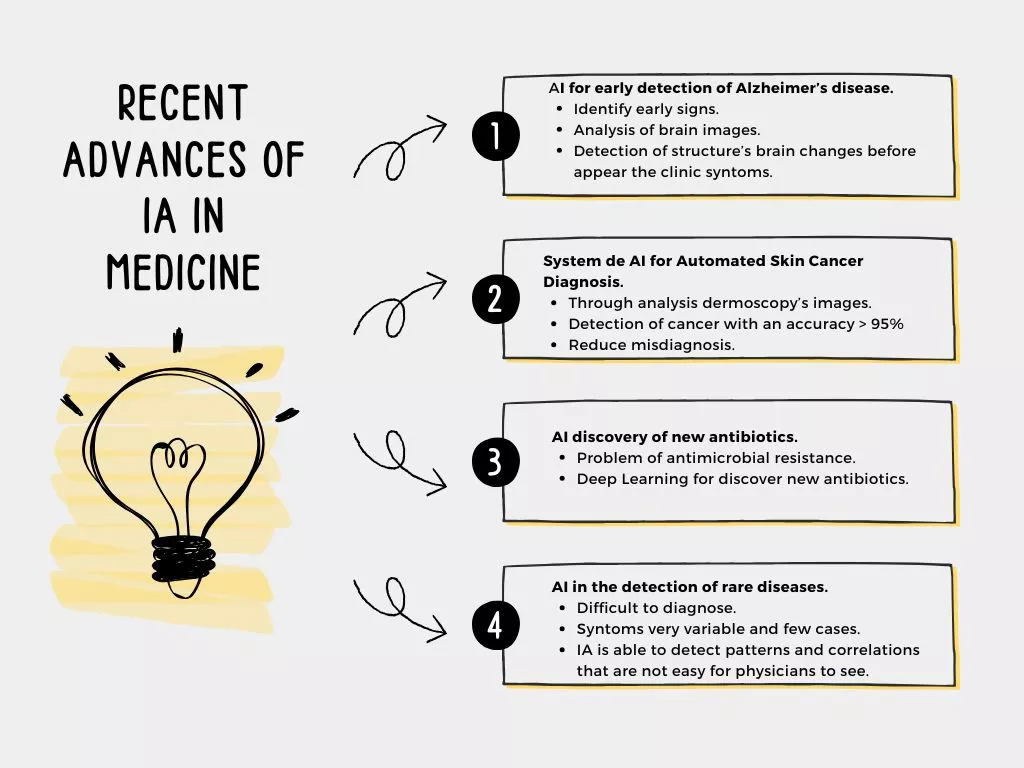
AI for early detection of Alzheimer’s disease.
In 2024, major advances have been made using AI to identify early signs of Alzheimer’s through analysis of brain images and genetic data. Complex algorithms analyze magnetic resonance images with genetic profiles to detect changes in brain structure long before clinical symptoms appear.
Early detection of Alzheimer’s has always been a challenge because the development of this disease is progressive and most of the time the first symptoms are very subtle.
AI System for Automated Skin Cancer Diagnosis.
The detection of melanoma cancer by means of AI has been achieved by means of dermoscopy image analysis with an accuracy of over 95%. They reduce misdiagnosis, increase the accuracy of disease detection, and decrease the rate of false positives and negatives.
In skin cancer, one of the most common cancers, early detection is needed to improve survival rates.
AI discovery of new antibiotics.
Modern medicine presents a major challenge in the form of antimicrobial resistance. As a solution, AI is beginning to play a crucial role in the discovery of new antibiotics.
As Nature describes, using deep learning models, researchers at the University of Cambridge have identified several new compounds that have potent antibacterial activity against multidrug-resistant pathogens.
These advances were achieved by analyzing millions of molecules in large databases and simulating how they interact with specific bacteria.
AI in the detection of rare diseases.
Rare diseases are difficult to diagnose because of their highly variable symptoms and the low number of cases in patients.
In 2024, by analyzing large volumes of genetic and clinical data, AI will be able to detect patterns and correlations that are not easy for physicians to see. In the Community of Madrid, they have decreased the diagnosis time of rare diseases from years to weeks, due to a system based on generative AI.
ARTIFICIAL INTELLIGENCE IN MEDICINE: A PROMISING FUTURE.
Artificial intelligence is revolutionizing the healthcare sector, offering innovative tools to improve diagnostic accuracy and personalize treatments.
From medical image analysis to the development of new drugs, AI is proving its value in multiple applications.
However, the rapid development of this technology poses significant challenges, such as ethics and data privacy.
It is critical to ensure that AI is used responsibly and equitably, prioritizing patient safety and well-being.
The future of AI in medicine is promising, with potential to improve global health and extend human life.
By addressing current challenges and fostering collaboration between healthcare professionals, researchers, and developers, we can maximize the potential of AI to build a healthier future.

IF YOU WANT TO INCREASE YOUR KNOWLEDGE (BIBLIOGRAPHY).
https://openexpoeurope.com/es/breve-historia-y-evolucion-de-la-ia-impulsada-por-el-codigo-abierto/ Autor: Paco Estrada.
Creación línea tiempo historia IA. https://create.piktochart.com/teams/33152348/dashboard
https://www.ibm.com/es-es/topics/artificial-intelligence
https://datascientest.com/es/inteligencia-artificial-definicion
https://blog.hubspot.es/marketing/tipos-inteligencia-artificial
https://datarmony.com/aprendizaje-supervisado-algoritmos-ejemplos/#
https://aws.amazon.com/es/what-is/ai-agents
https://www.iic.uam.es/lasalud/realidad-inteligencia-artificial-salud/
https://www.linkedin.com/pulse/la-inteligencia-artificial-en-sanidad-beneficios-y-el-diego-7ripf
Nature. (2023). AI-driven predictions in chronic disease management. Retrieved from Nature.
Science Translational Medicine. (2024). AI in the early detection and diagnosis of rare diseases: A breakthrough in personalized medicine. Retrieved from Science Translational Medicine.
The Lancet Digital Health. (2024). AI-enhanced early detection of Alzheimer’s disease using multimodal imaging and genetic data. Retrieved from The Lancet.
JAMA Dermatology. (2024). Efficacy of AI in Automated Skin Cancer Detection: A Multicenter Study. Retrieved from JAMA Dermatology